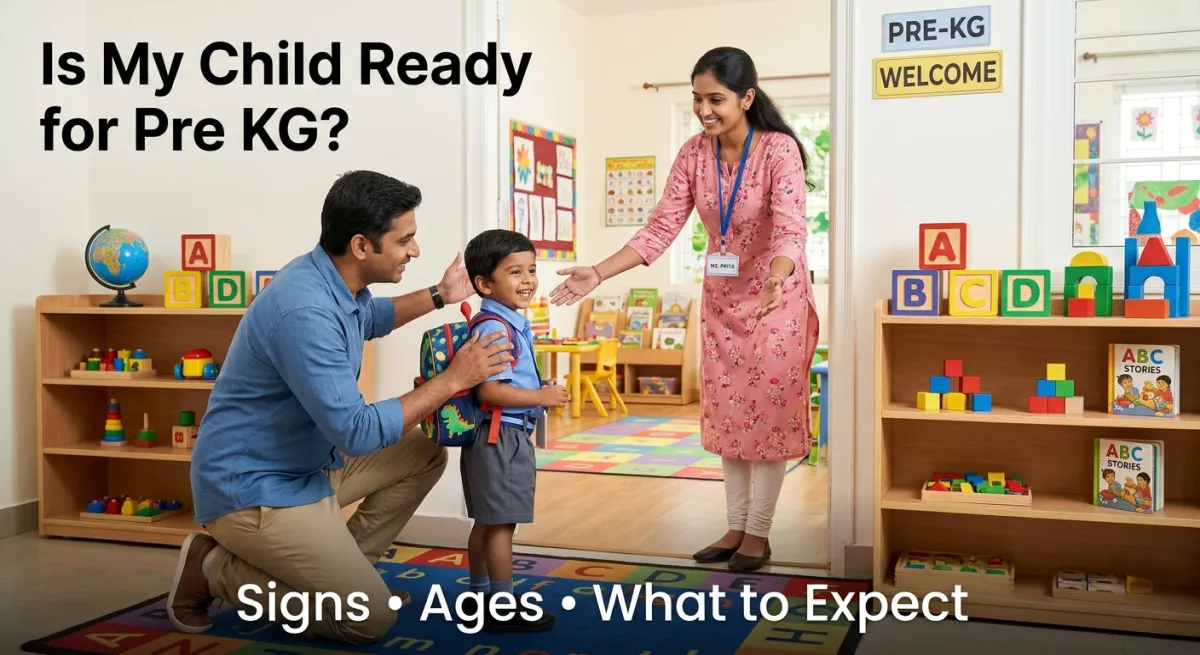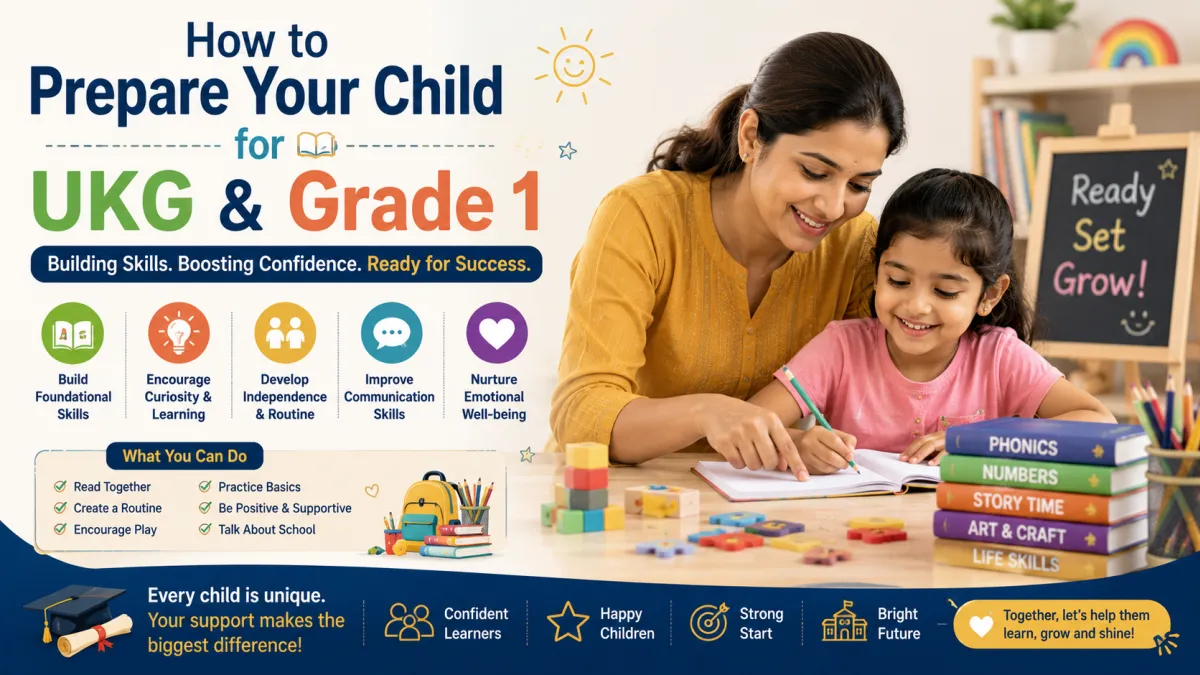
The transition into UKG (Upper Kindergarten) and Grade 1 is one of the most significant shifts in a young child's school life. It is the point where school stops being primarily about play and begins to involve structured learning, written work, and longer periods of sitting and focusing. Many children navigate it smoothly. Some find it harder than expected — not because they are not capable, but because they were not quite prepared for what changed.
Here is what that preparation looks like — and how parents can do most of it naturally at home.
What UKG and Grade 1 actually demand
Before preparing your child, it helps to know what you are preparing them for. By the end of UKG in a Tamil Nadu English medium school, children are typically expected to:
- Recognise all uppercase and lowercase letters and write them
- Read simple three-letter words (CVC words: cat, map, sun)
- Count to at least 20 and recognise written numerals
- Understand basic concepts: big/small, more/less, before/after, shapes
- Hold a pencil with a proper grip and write within lines
- Follow classroom instructions independently
- Sit and focus on a task for 15–20 minutes
Grade 1 builds directly on this. The jump in written work and reading expectation between LKG and Grade 1 is significant — and children who arrive at Grade 1 without UKG foundations spend the first term catching up rather than building forward.
Building language readiness at home
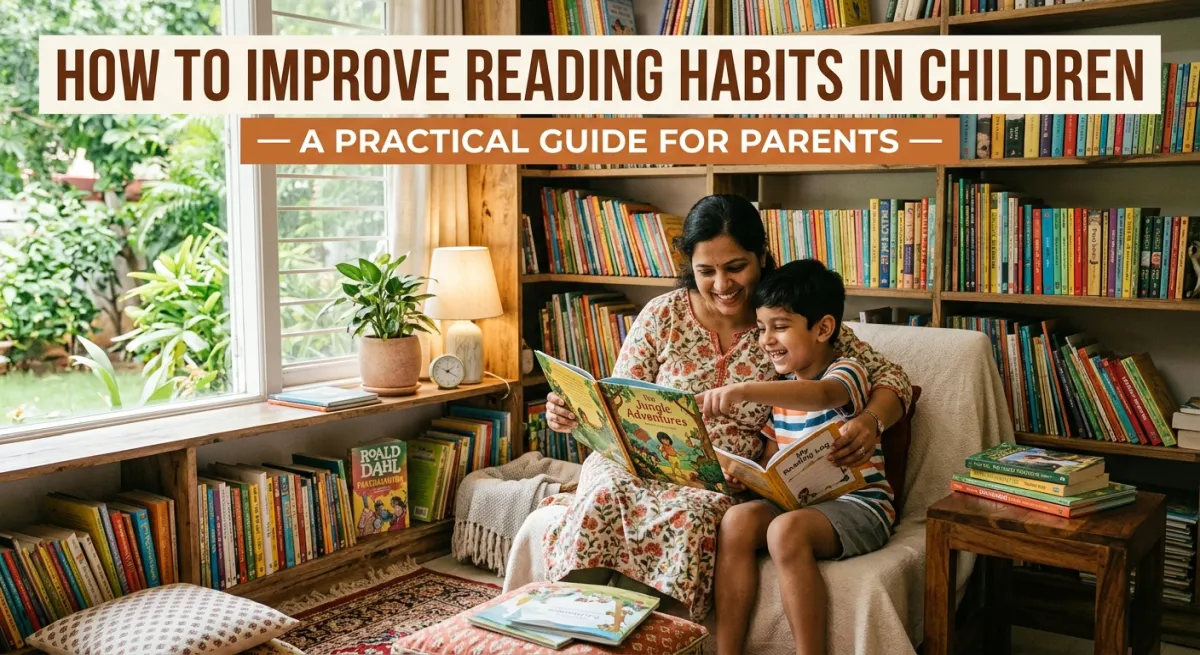
Read aloud every day. This is the single most effective preparation for school language skills. It builds vocabulary, listening comprehension, love of story, and — gradually — awareness that print carries meaning. You do not need to teach letters to do this. Just read, point to the words as you go, and talk about what is happening in the pictures.
Talk about everything. Children who are talked to extensively at home arrive at school with larger vocabularies and better comprehension than those who are not — regardless of the language. Explain what you are doing when you cook. Ask what they think will happen. Tell them stories from your own childhood. Language development is conversation-powered.
Introduce letter sounds before letter names. In English reading, the sound "kuh" is more useful than the name "see" for the letter C. Phonics — letter-sound relationships — is the foundation of reading. You can introduce this through simple rhyming games, identifying beginning sounds ("what sound does 'mango' start with?"), and eventually letter-sound flashcards.
Building number sense
Children who struggle with early maths are usually not struggling with numbers — they are struggling with the abstract symbols for numbers they have not yet concretely experienced.
- Count objects regularly and in context: "let us count how many mangoes are in the bag"
- Compare quantities: "which plate has more? which has fewer?"
- Introduce number symbols only after counting with objects is solid
- Play simple board games with dice — counting moves builds number intuition naturally
A child who has counted real objects ten thousand times understands number in a way that no worksheet can shortcut.
Building fine motor skills for writing
Holding a pencil correctly and writing within lines requires finger strength and coordination that develops through use — not through writing practice alone. Activities that build this include:
- Playdough: squeezing, rolling, pinching — all strengthen the hand muscles used in writing
- Cutting with child-safe scissors along lines
- Beading, lacing boards, and puzzles
- Colouring with crayons (smaller crayons encourage better grip than thick ones)
- Drawing freely — let them draw what they like, not what you specify
Only after these skills are developing well should you introduce pencil and paper letter tracing — and even then, keep sessions short (5–10 minutes) to avoid frustration.
Building classroom readiness
The academic preparation matters less than most parents think. What determines how quickly a child settles into school is social and emotional readiness:
- Can they follow two to three-step instructions without reminders? Practice this at home — "please put your cup in the sink and then bring me your shoes."
- Can they manage their own basic needs? Opening a water bottle, using the bathroom independently, putting on and removing shoes — these are important in a classroom where the teacher cannot manage every child's physical needs.
- Can they wait for a turn? Board games, queuing for something they want, taking turns in conversation — all build this.
- Can they recover from small frustrations? A child who cries for extended periods when something does not go right will struggle more in Grade 1 than a child whose content knowledge is slightly behind. Emotional regulation is a school readiness skill.
What not to do
Do not begin formal academic tutoring before Grade 1 unless there is a specific identified need. Children who are over-coached in academics before Grade 1 sometimes arrive bored and resistant — they have been forced through content at home that the school covers again at the appropriate pace. What they have not developed is the patience, curiosity, and independence the classroom demands.
At The NEST School, Sathyamangalam, our Pre KG, LKG, and UKG classes are designed around the XSEED active learning framework — which means children build foundations through experience and guided play, not through rote instruction. Our Primary teachers are trained to identify where each child is and meet them there. If you would like to visit and see the early childhood classrooms in person, we welcome parent visits Monday to Saturday, 8:30 AM to 4:30 PM, at Bannari Road, Sathyamangalam. Call +91 99620 09600 or visit thenestschools.in.