What a child eats at school affects more than their physical health. Nutrition directly influences concentration, energy levels, mood, and the ability to retain information in the afternoon sessions — which are often when the most demanding learning happens.
For parents in Tamil Nadu packing school lunch boxes, the challenge is balancing what children will actually eat, what is practical to prepare at 6 or 7 AM, what survives a warm morning in a school bag, and what genuinely nourishes a growing child. Here is how to approach all four.
The nutrition basics a school lunch box needs
A good school lunch provides energy that sustains — not a spike that crashes. This means:
- Complex carbohydrates for sustained energy: rice, roti, millets (ragi, jowar), oats, whole wheat bread
- Protein for concentration and growth: dal, eggs, paneer, curd, legumes, chicken or fish (if non-vegetarian)
- Vegetables and colour for micronutrients: whatever the child will eat — hiding vegetables in dishes is legitimate strategy
- Hydration: a water bottle is as important as the food. Children who are mildly dehydrated show measurably poorer concentration and memory recall.
What to minimise: ultra-processed snacks (chips, biscuits with refined flour and excess sugar), sweetened drinks, and foods that digest very quickly and leave the child hungry and restless within an hour.
Tamil Nadu lunch box ideas that work
These travel well, are familiar to most children, and provide good nutritional balance:
Rice-based
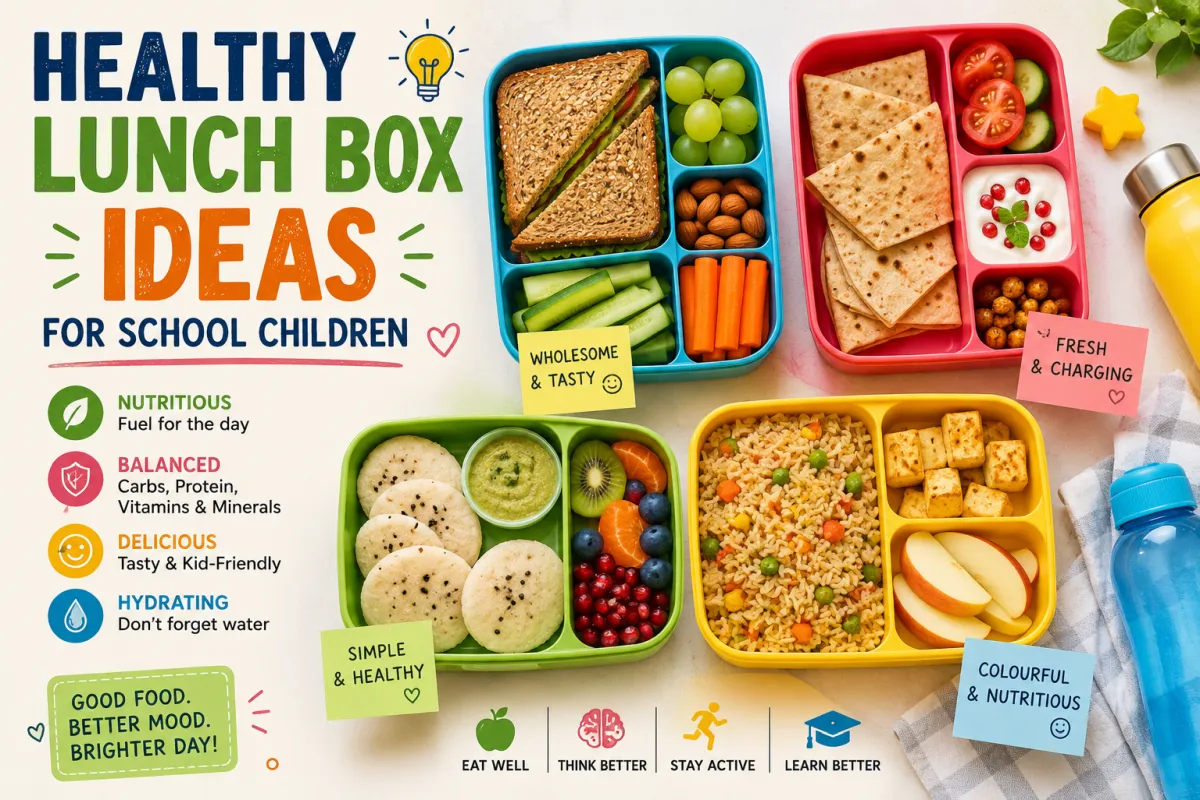
- Lemon rice or tamarind rice with roasted peanuts and a boiled egg — protein and carbohydrates, travels well, most children love it
- Curd rice with a small portion of pickle and papad — cooling for warm days, easy to digest
- Sambar rice or rasam rice packed separately and mixed at lunchtime — familiar and filling
- Fried rice with vegetables and egg — if your child eats it at home, it packs well
Roti and paratha-based
- Chapati with potato masala or mixed vegetable filling — easy to eat, no spilling
- Ragi roti with coconut chutney packed separately — good iron and calcium content, filling
- Stuffed parathas (aloo, paneer, mixed vegetable) with a small portion of curd
Tiffin items that travel well
- Idli with sambar and chutney in separate containers — packs well, light and digestible
- Upma or pongal with a small dal or chutney
- Poha (aval upma) with vegetables and peanuts — quick to make, popular with most children
The best lunch box is not the most nutritious one — it is the most nutritious one your child will actually open and eat.
Smart additions that most children accept
These are easy to include alongside the main item and add nutrition without becoming a battle:
- A small portion of fresh fruit: banana, guava, apple slices, seasonal options. Avoid fruit that browns quickly or makes a mess.
- A handful of roasted nuts and seeds: groundnuts, sunflower seeds, pumpkin seeds mixed with a little jaggery if needed to make it appealing
- A boiled egg — if your child eats eggs, this is the easiest protein addition
- A small box of homemade murukku, thattai, or chikki — far better than packaged snacks
Practical packing tips
Temperature and food safety. In Tamil Nadu's heat, food packed at 6 AM can reach temperatures that encourage bacterial growth by 10 AM. Use an insulated lunch bag. Curd and dairy-based items are particularly vulnerable. When in doubt, ice packs or insulated containers are a small investment against stomach upsets.
Portion size by age. A Class 2 child and a Class 8 child have very different appetites. Children who are given too much food often eat poorly — the quantity feels overwhelming. Start with slightly less than you think they need and increase based on feedback. A child who finishes everything and asks for more is telling you the portion was right.
Involve the child in choice. Children who have some say in what goes into their lunch box — even a small choice between two options — eat it more reliably than those who open a box and find something they did not expect. This does not mean giving them full control. It means asking: "should we do lemon rice or curd rice tomorrow?"
Consistent containers. Easy-to-open containers reduce the chance of a child skipping lunch because the box is too hard to open or leaks on their bag. Spillproof tiffin boxes with clip locks are worth the slightly higher cost.
Foods to avoid in a school lunch box
- Very spicy items — children eating quickly in a noisy lunch period struggle with anything that causes discomfort
- Sugary drinks or packaged juices — these cause an energy spike followed by a crash that lands in afternoon class
- Chips and fried packaged snacks as the main item — zero nutritional value, expensive habit to build
- Foods that require a lot of preparation to eat at school (bones, shells, peeling)
At The NEST School, Sathyamangalam, we encourage home-packed nutritious lunches and have clear guidelines against carbonated drinks and packaged junk food on campus. Our school day is structured to include a proper lunch break with adequate time — not a rushed five minutes. We believe what children eat during the school day is part of how well they learn during it.
For admissions enquiries, visit us at Bannari Road, Sathyamangalam, call +91 99620 09600, or explore more at thenestschools.in.