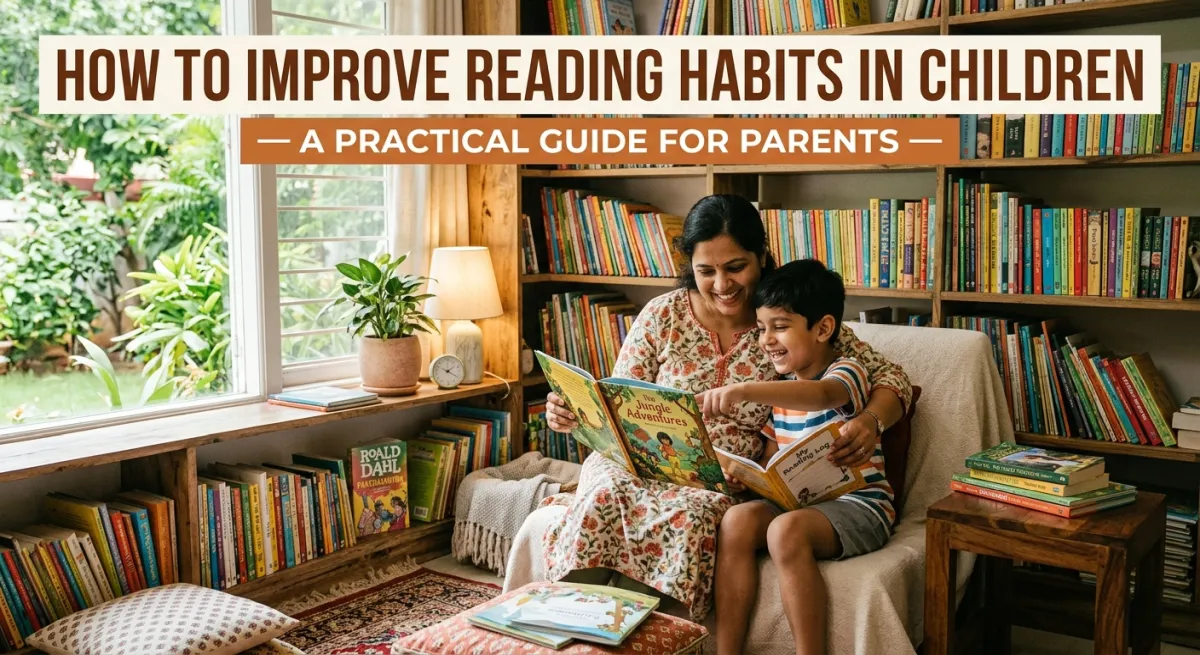
When parents say their child does not like reading, what they usually mean is that their child does not like sitting still with a book they find uninteresting. That is not a reading problem. It is a book-matching problem, a habit problem, or sometimes a decoding problem disguised as a motivation problem.
The distinction matters because the solution is completely different depending on which it is. This guide covers all three — and gives you practical steps you can start this week.
First: rule out a decoding issue
Before assuming your child simply does not enjoy reading, check that they can read fluently without strain. A child who finds decoding — the physical act of translating letters into words — effortful will avoid reading not because it is boring, but because it is hard work. Signs include:
- Reading slowly even for short passages
- Losing their place frequently and having to restart
- Substituting words that look similar (saying "house" for "horse")
- Avoiding reading aloud
If you see these signs consistently, speak to the class teacher. A targeted approach to phonics and fluency will do more than any amount of motivation-building.
Match the book to the child, not the level
The most common reading habit mistake is giving children books that are slightly too hard and calling it enrichment, or slightly too easy and calling it practice. Neither builds the habit of choosing to read.
A child reads voluntarily when they can read fast enough to feel the story moving. That means the book should be at their independent reading level — where they understand 95%+ of words without stopping. Save stretch books for reading aloud together.
The goal at this stage is not to improve their reading. It is to make reading feel good enough that they want to do it again tomorrow.
What does your child already love? Football? Animals? Mystery? Space? There are excellent books in every genre for every age. Ask your school librarian or search by interest rather than by level.
Build the habit before the library
Habits need a trigger, a routine, and a reward. For reading:
- Trigger: a fixed time and place. After dinner. In bed before sleep. Every day at the same moment removes the decision of "when" from the equation.
- Routine: 15 to 20 minutes only, at first. Short and consistent beats long and occasional. Do not push for more until they are asking for more.
- Reward: conversation. Ask them what happened in the story. Not to test them — because you are genuinely curious. Children who feel their reading is noticed and valued read more.
Read aloud together longer than you think you should
Many parents stop reading aloud to children once the child can read independently — often around Class 2 or 3. This is too early. Reading aloud to children builds vocabulary, listening comprehension, and — most importantly — a positive emotional association with books and story.
Children who are read to regularly by parents have measurably larger vocabularies by Class 5 than those who are not, regardless of how much they read on their own. Reading aloud works best when you read books slightly above their independent level — books they could not yet read alone, but can fully enjoy when heard.
Model it, do not just prescribe it
If your child sees you on your phone but never sees you with a book, the message they receive is that books are for children and phones are for adults. Children's reading habits are shaped more by what they observe at home than by any school programme.
This does not require hours. A visible 20-minute reading period in the evening — where you read and they read — is more powerful than any reward chart.
At school: what good reading culture looks like
At The NEST School, Sathyamangalam, reading is not treated as homework. It is part of classroom life — through independent reading time, class read-alouds, and the XSEED framework which integrates language development naturally across subjects. Students who come from strong home reading environments typically show faster vocabulary growth and stronger comprehension across all subjects by Class 6.
If you would like to discuss how reading is developed at our school or how to support your child at home, call us at +91 99620 09600 or visit us at Bannari Road, Sathyamangalam. You can also learn more at thenestschools.in.