In 2023, a tool called ChatGPT answered a Class 12 chemistry question more accurately than most students who had studied the chapter. In 2025, AI systems began passing professional entrance exams — law, medicine, engineering — that took humans years of preparation.
This is not science fiction. It is the environment your child will be working in when they graduate. The question every parent should be asking is not "will AI affect my child's career?" — it will — but "what should my child know and be able to do that AI cannot replace?"
What AI is good at
To know what children need to learn, you first need to understand what AI does well:
- Retrieving and summarising information
- Pattern recognition in large datasets
- Generating text, images, code, and designs based on instructions
- Automating repetitive tasks — data entry, scheduling, routine analysis
- Answering well-defined questions quickly and accurately
These are the tasks that currently occupy a large portion of office work. They are also the tasks that rote-learning-heavy education systems prepare students for. Memorising facts, reproducing formulas, following fixed procedures — these are precisely what AI does faster and more accurately than any human.
What AI cannot do well — yet
The skills that remain genuinely human are the ones that involve:
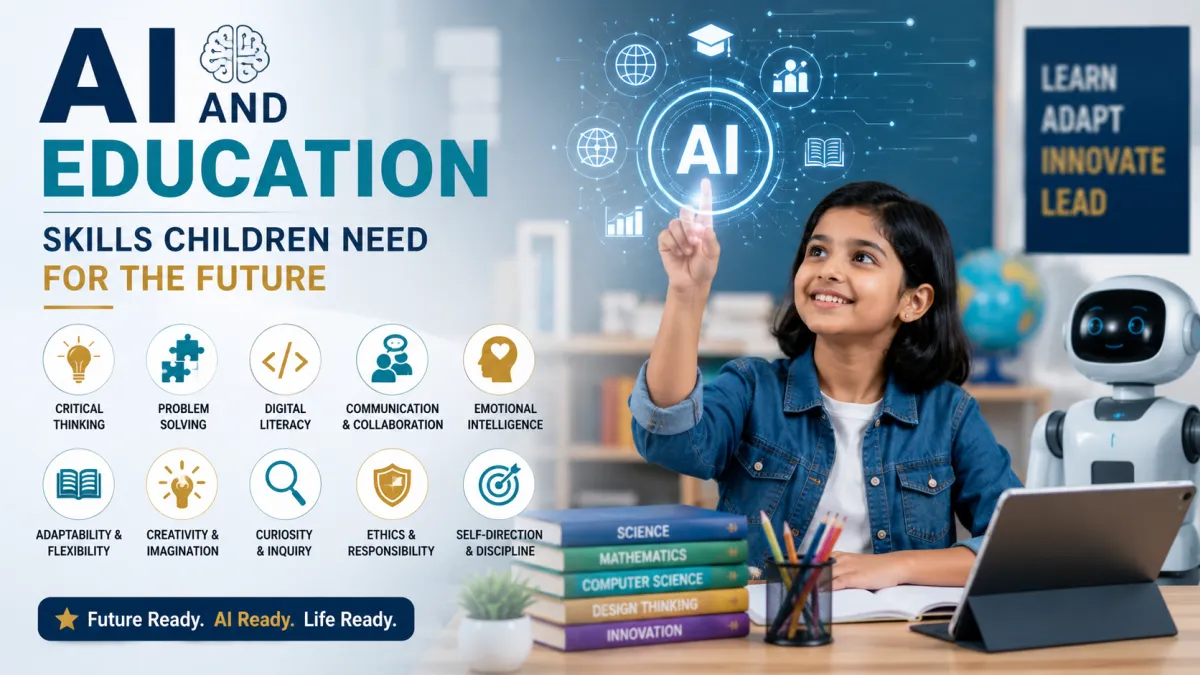
- Critical thinking and original judgement — evaluating sources, identifying flawed reasoning, making decisions in ambiguous situations
- Creative problem-solving — not just generating options, but knowing which problem is worth solving and why
- Human empathy and social intelligence — reading a room, navigating conflict, building trust
- Cross-domain thinking — connecting ideas across different fields in ways that produce genuinely new insights
- Ethical reasoning — deciding what should be done, not just what can be done
- Effective communication — not writing more text, but knowing what to say, when, and to whom
The children who will thrive in an AI-integrated world are not the ones who know the most facts. They are the ones who know what to do with facts — and what to question.
What this means for how children should learn today
Education systems that centre on memorisation, single correct answers, and standardised testing produce students who are good at tasks AI is already better at. Education systems that develop reasoning, inquiry, collaboration, and communication produce students who can work alongside AI rather than be replaced by it.
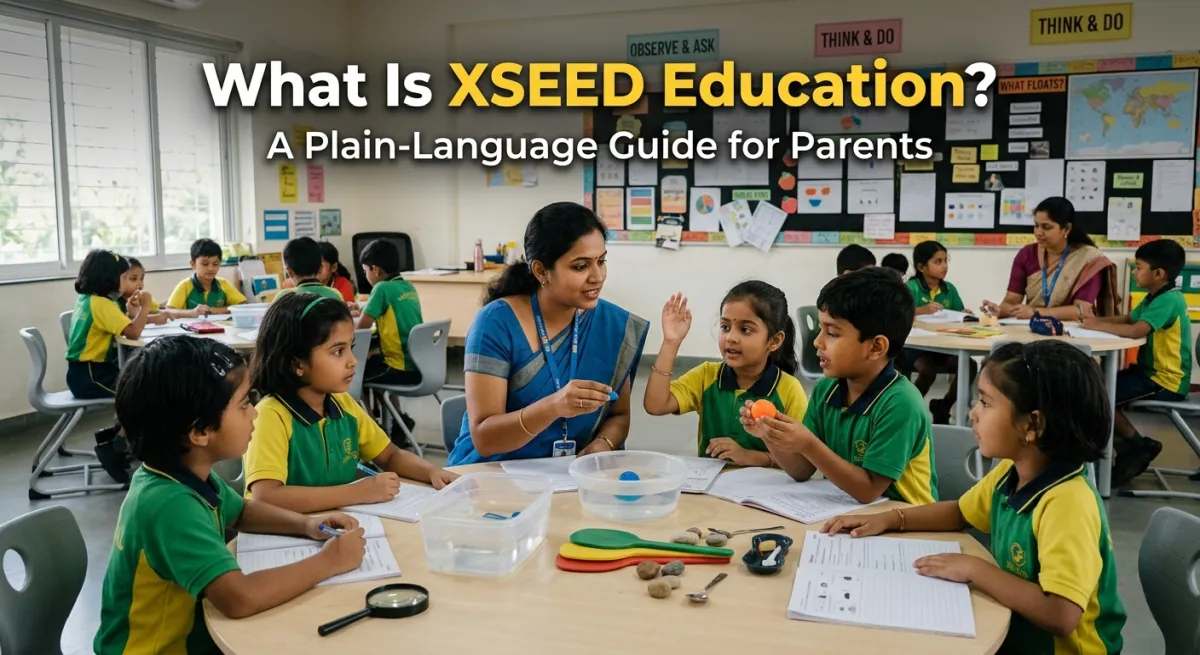
This is one of the reasons frameworks like XSEED Education — used at The NEST School, Sathyamangalam — matter beyond academic results. The XSEED approach builds the habit of questioning, of connecting observation to concept, of working through problems rather than around them. These are not soft skills. They are the core competencies of the next twenty years.
Specific skills worth developing now
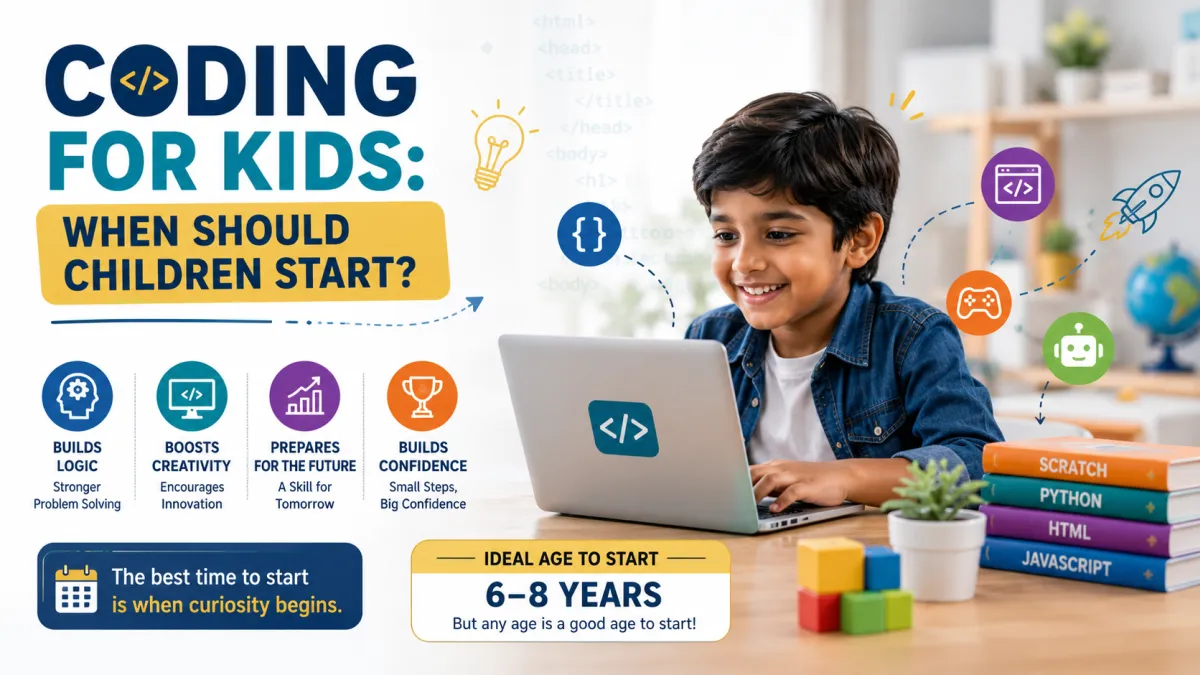
Coding and computational thinking. Not necessarily professional programming, but understanding how systems work, how to break a problem into steps, and how to communicate instructions precisely. This builds a mental model of how AI tools work — essential for using them well rather than blindly.
Media and information literacy. The ability to identify credible sources, spot misleading framing, and evaluate evidence is more valuable now than at any point in history. AI generates convincing-sounding misinformation easily. Children need to be equipped to question what they read.
Communication and presentation. As AI handles more writing tasks, the ability to communicate ideas clearly in front of others — in conversation, in debate, in negotiation — becomes rarer and more valuable.
Self-directed learning. The fastest learners in an AI-accelerated world are those who know how to learn — how to find information, evaluate it, and build genuine understanding independently. This is a habit built in childhood, not something acquired later.
A word on fear
Some parents are afraid that AI will make education irrelevant or that their child will compete against machines. This fear is understandable but misdirected. AI amplifies the capable and replaces the replaceable. A child who learns to think clearly, communicate well, and approach problems with genuine curiosity will find AI to be a powerful tool in their hands — not a threat to their livelihood.
The goal of education today is to produce children who are not afraid of tools — who pick them up, understand them, and use them purposefully.
At The NEST School, Sathyamangalam, we are preparing students for this future through the IIT School Connect programme, our Atal Tinkering Lab, XSEED active learning, and a teaching faculty trained to develop thinking alongside content. If you would like to learn more, visit us at Bannari Road, Sathyamangalam or call +91 99620 09600. Learn more at thenestschools.in.